Gate & railing restoration for Kent House — Hammersmith.
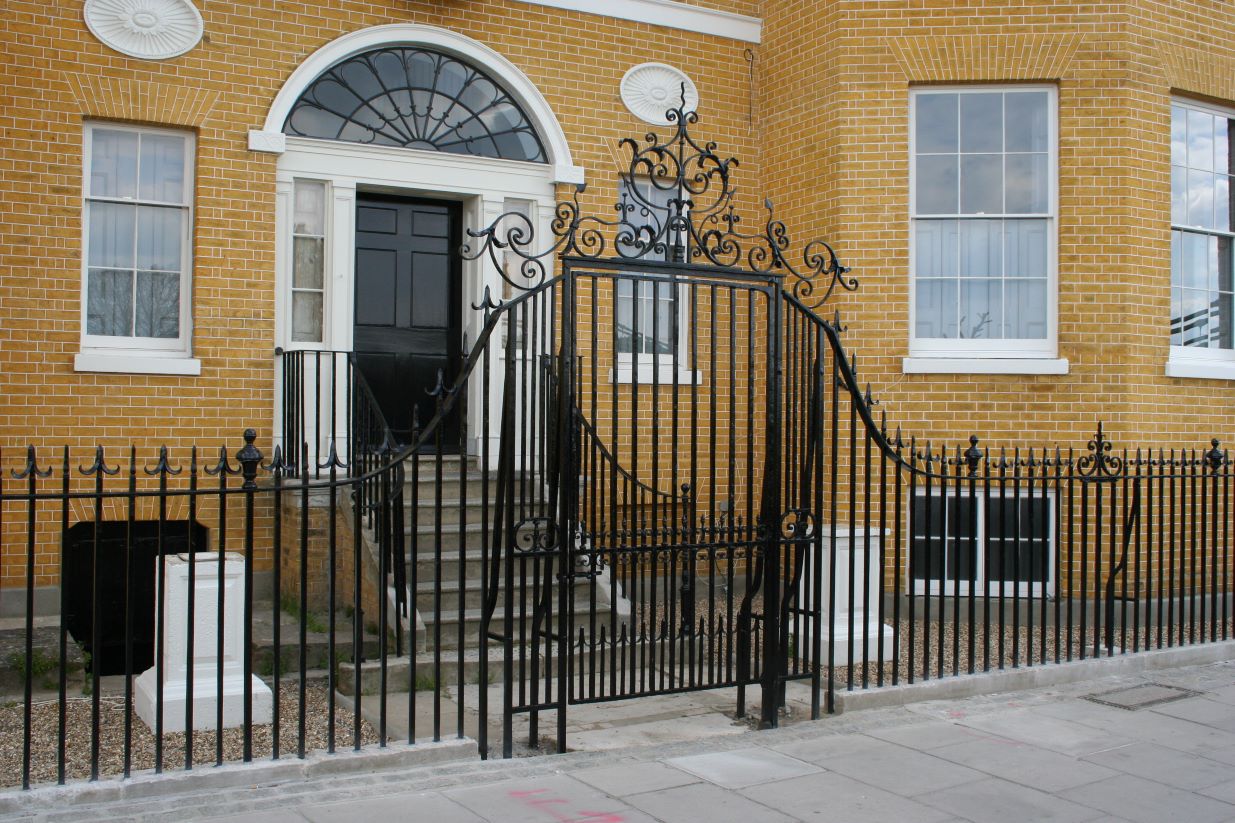
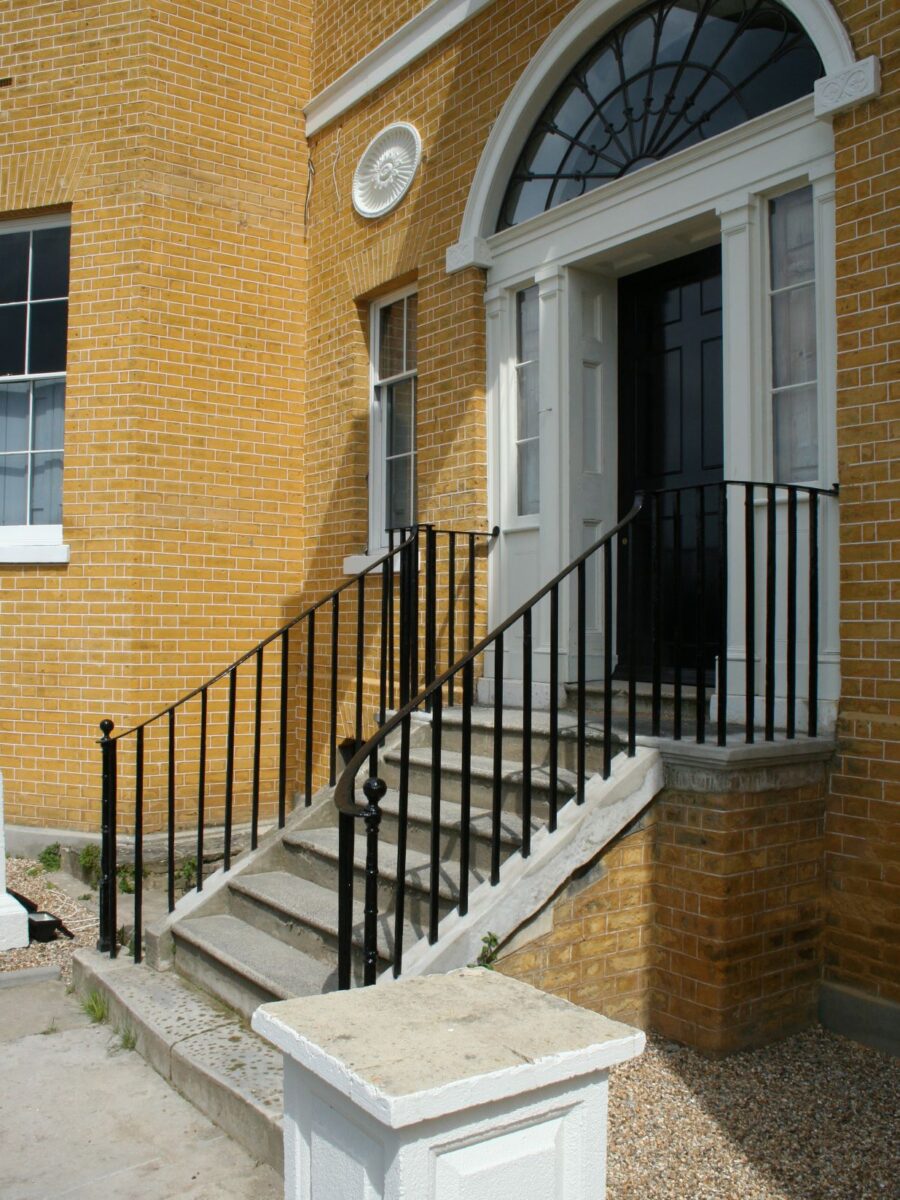
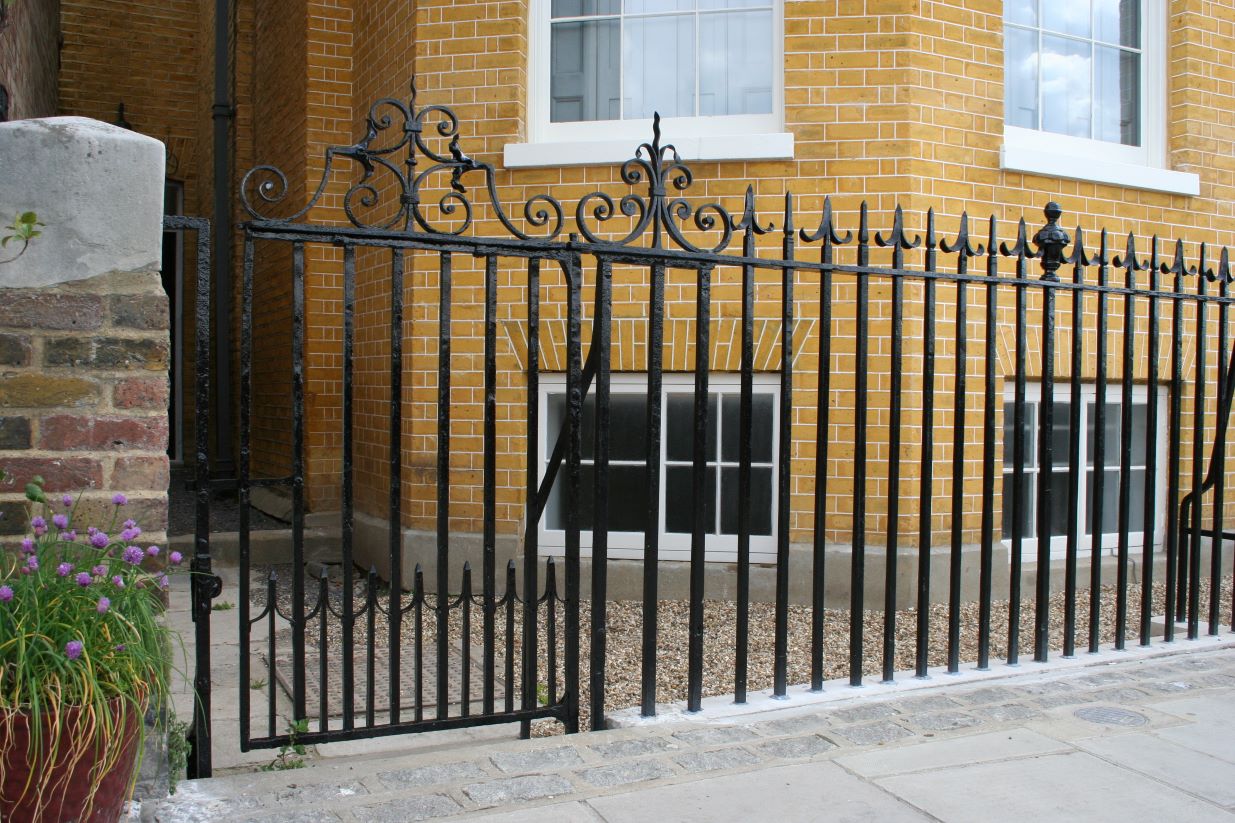
Kent House, including railings and gate, was given statutory protection as a Grade II listed building in June 1954.
It is also on the English Heritages buildings at risk register, which suggests that that the wrought iron gates and railings may be of an earlier date than c.1762, it was placed on the register as the owners had not maintained the building, gates and railings to an acceptable standard, since then Listed Building Consent for refurbishment of the railings and conversion of house to a single dwelling approved in 2007 as been completed.
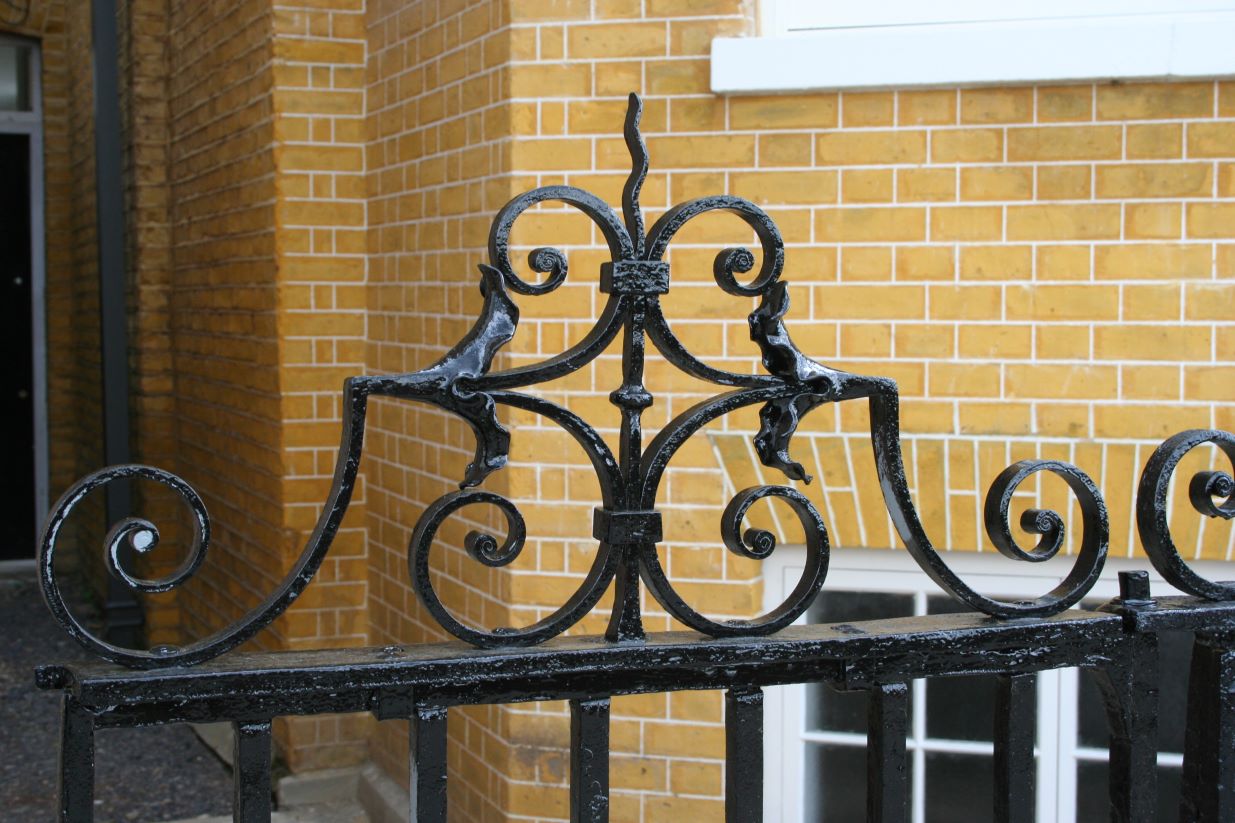
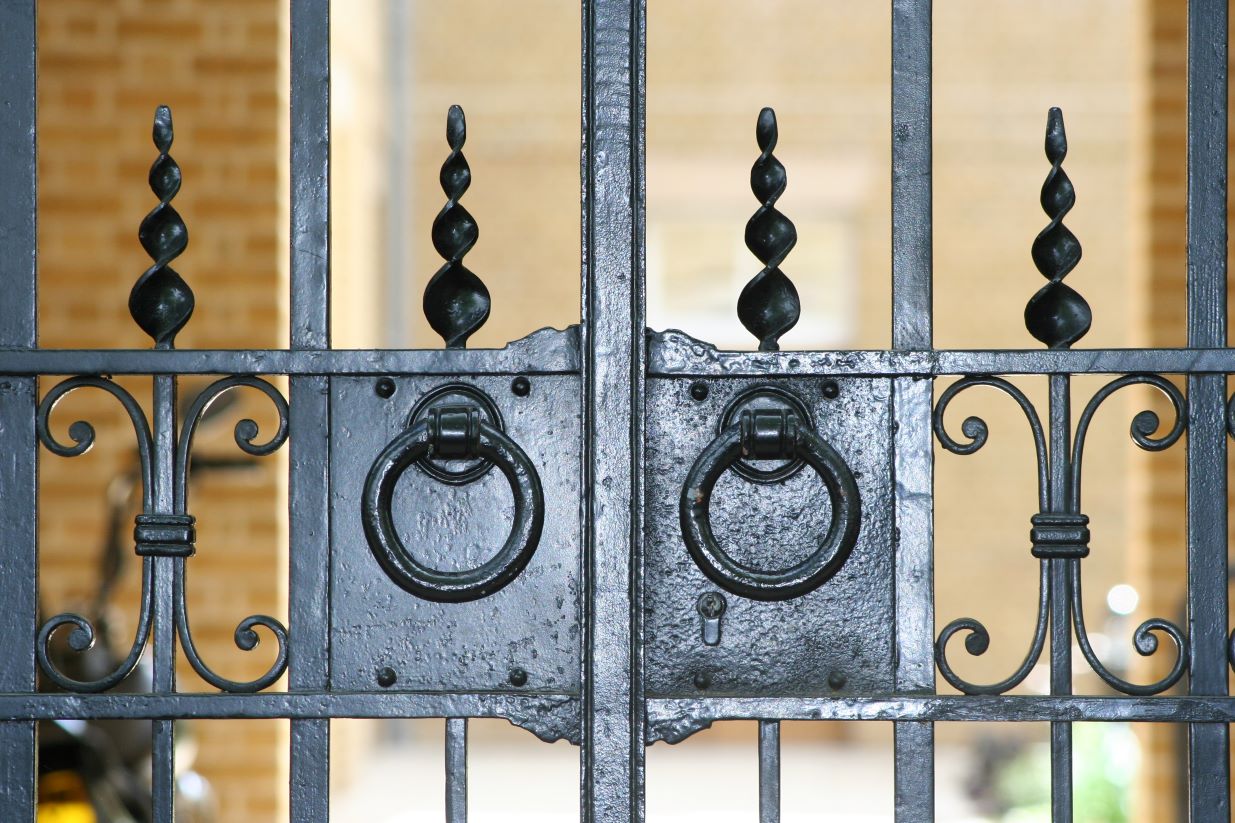
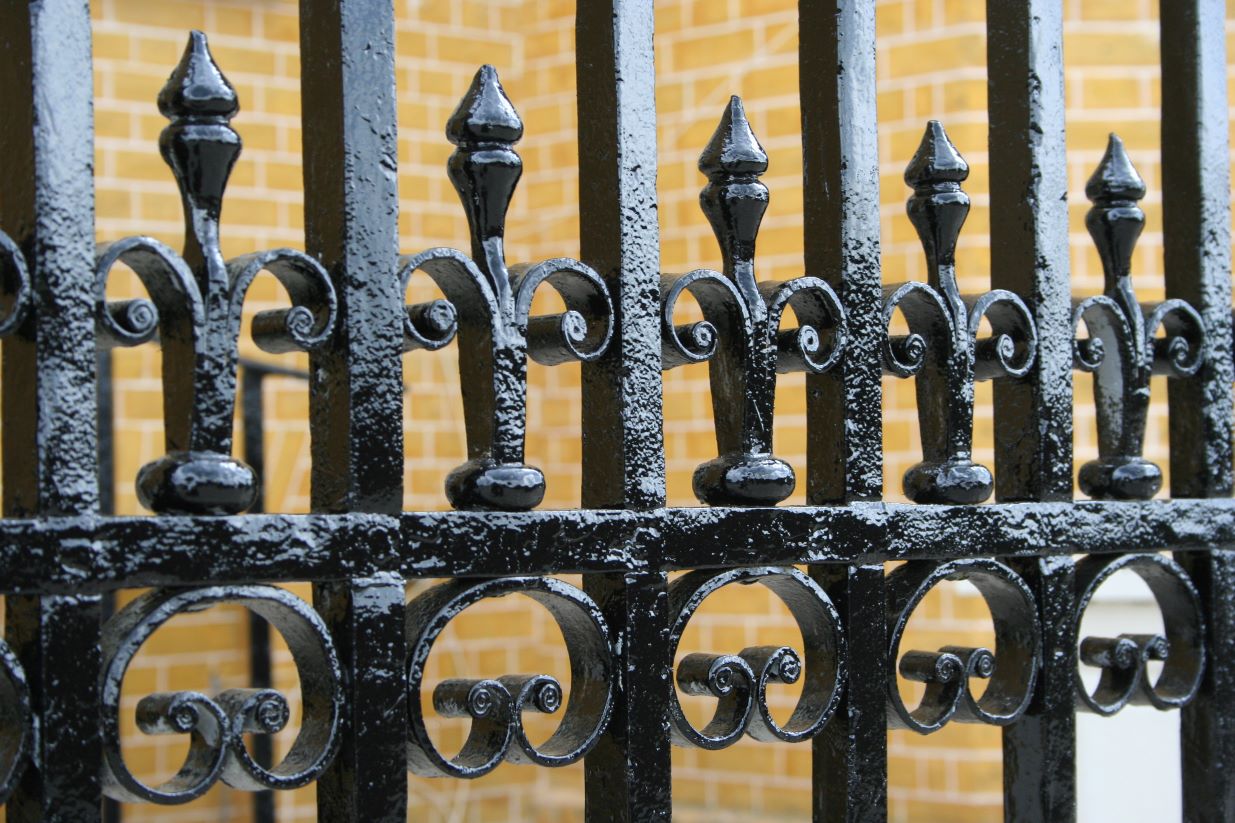
We restored the gates, overthrow and railings in 2010, using the historical photos available to us we were able to fully restore all the iron work to its forma glory. As recorded in the London Survey, written in 1915, a detailed account of the house and architectural iron work and is recorded as follows: ‘The doorway is reached by a flight of steps, and the forecourt is enclosed by a gateway and railings of wrought iron. The arrangement of the side panels to the gate is a little curious, but the detail of the scroll-work in the overthrow and in the spearheads to the railings is of a very high order, and suggests an even earlier date than that of the house. The whole grouping, however, of gate, railings and doorway appears to be a single conception, and is wonderfully successful.’
MORE DETAILS
The gate was no longer hanging and was in storage and the overthrow was completely missing, again the gates required time and care to restore them.
There was some evidence of a past attempt to make missing parts but these were poorly made and installed.
Once most of the railings were removed from site, and the ironwork was back in our workshops only could the full extent of the work needed to be assessed. The corrosion, cracks and distortion and the missing finer detailing required very precise recording and agreement to move the project on.
The cast elements needed to have a pattern made by a highly skilled pattern maker and then moulds made and cast by a specialist heritage foundry.
The correct use of material is an important part of restoration. We are the only company in the world that rolls and in turn supplies other blacksmiths with genuine wrought iron material. The replacement materials were assessed and then hot rolled and cut to size by our specialist rolling team. Then it was the turn of our blacksmiths to deal with the replacing the corrosion, lamination, distortion. This required the skills of a team of our highly qualified blacksmiths.
The gates and railing placed in the our dipping tanks and then left for a period of time to gently allow all the paint to dissolve, final removal of any remaining paint layers was done applying heat and cleaning using a wire brush.
Our work force follow the traditional heritage skills of a blacksmith training that has gained through years of experience through working on some very high profile restoration projects. The restoration skills were largely left in this country and very few companies offer the correct techniques needed for the level of care and attention to detail Kent House ironwork required. We dealt with the split laminating bars, highly corroded bars, in a way that the original smiths would have done. So, the replacement elements were as they would have been when they were originally erected required precision and skill.
There was much to-ing and throwing with conservation architects and the main contractor as a new over throw needed to be made. Photos were used along with much research to replicate the over throw as near as possible to the original.
The railings were replaced into a small coping stone by treating with a process that is the traditional method of securing railings into stone. Railings were heated into the old coping stones, a traditional method of installing wrought iron railings uprights into stone, to be carefully removed by completely melting the lead to allow the uprights to be eased out.
The restoration work involved some very interesting work from our very talented team of skilled blacksmiths. It was a project in which we gained more experience, incurred problems that needed to be resolved, which we believe our team has done. It was a privilege to be asked to work on this historical gate and railings.
Client: London Interspace Ltd
You might also be interested in

York Minster Candle Holders
Estate style driveway gates